A beaver has a broad, flattened tail and a thick body. A river otter has a long, streamlined body and a tail that narrows toward the tip. Those are the most useful differences when you get a good look. A brown head slipping through the water is a harder puzzle. The California Department of Fish and Wildlife’s beaver profile and National Park Service’s river otter profile explain the features behind the identification.
To answer beaver or otter, start with what you actually saw. Was the tail visible? Did the animal climb onto a bank? Could you make out what it was eating? A few details can tell you much more than a splash, and learning why those details matter makes the next encounter more interesting.
On the Napa River History Tour, wildlife observations join the stories of the river and the town around it. This beaver or otter guide gives you a few things to look for along the way.
Beaver or otter: compare the clues
| Feature | North American beaver | North American river otter |
|---|---|---|
| Tail | Wide, flattened and paddle-shaped | Long, muscular and tapering |
| Body | Stocky, with a relatively large head | Elongated and sleek, with short legs |
| Food | Plants, including leaves, aquatic vegetation and inner bark | Animal prey, especially fish and other aquatic animals |
| Animal group | A rodent: Castor canadensis | A member of the weasel family: Lontra canadensis |
Identification and diet references: CDFW: beaver biology; NPS: river otter.
Use the clues together. Water can hide nearly everything except the head, so a look at the body or tail can make all the difference.
A closer look at the two animals
The beaver’s tail is out of view
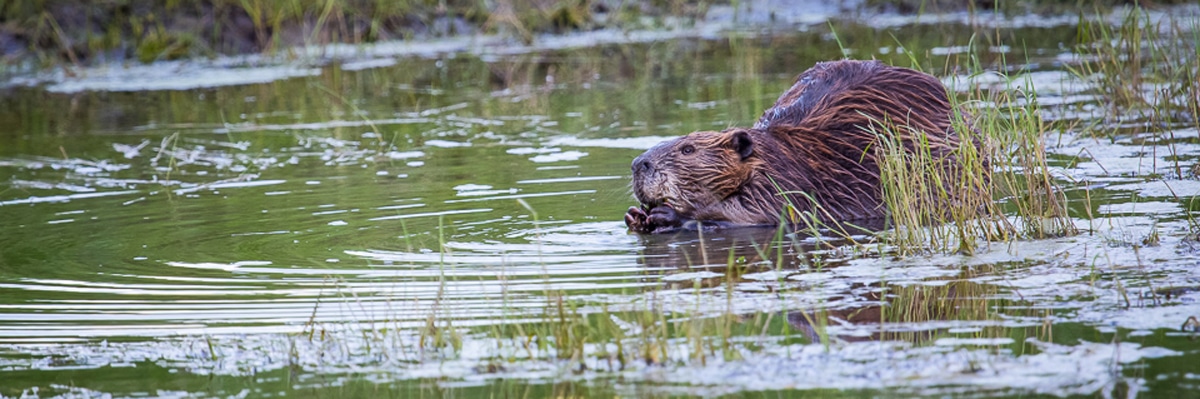
Here you can see the beaver’s head, wet fur and front paws near its mouth. Its famous tail is out of view. Those little front paws are worth watching: beavers use them to handle food and building material.
The otters offer a clearer outline
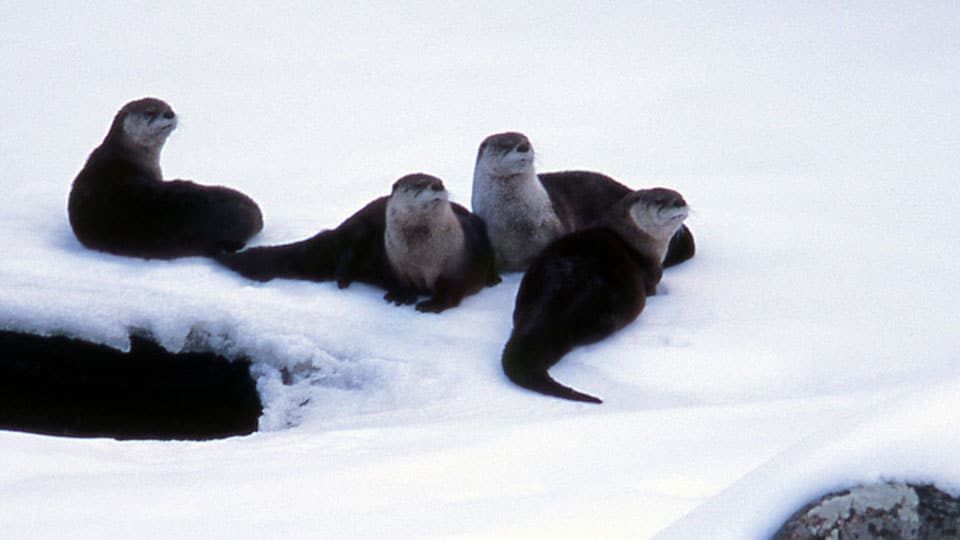
The featured photograph shows four river otters on snow beside an opening in the ice. Follow the foreground animal’s outline from its elongated body into its tapering tail. That whole-body view is much more informative than a head alone.
Featured photograph: river otters in Yellowstone National Park. Photo: NPS. Species guide and photo source.
Beavers: what all that chewing is for
Fish are not on a beaver’s menu. Beavers eat plants, including aquatic vegetation and leaves, with bark and the living layer beneath it becoming important foods in colder months. Their hand-like front feet help them handle material, while their webbed hind feet suit life in the water. Watch a feeding beaver long enough and those small front paws can be as absorbing as the rest of the animal. CDFW describes these feeding and physical adaptations.
The branches a beaver cuts can also become building material. Where beavers dam streams, they change water flow and create habitat used by other wildlife. That is why biologists call them ecosystem engineers. The term describes something quite practical: an animal can alter the place where it lives, with consequences for its neighbors. CDFW explains the ecological effects of beaver activity.
A riverbank can be home
Beavers living on rivers may use bank dens rather than the mound-shaped lodges familiar from photographs. The National Park Service describes this behavior in its beaver natural history account. So an absence of a conspicuous lodge is not enough to rule out a beaver. You can look for the animal and its visible activity without searching out its home.
River otters: a hunter built for water
An otter’s long body and muscular tail belong to an active aquatic predator. Its feet and tail help it maneuver, and its whiskers help it detect prey in dark water or along a muddy bottom. Fish, crustaceans and amphibians are among its foods. The U.S. Fish and Wildlife Service’s California mammal guide describes these adaptations in detail.
Even the small features have a job. An otter’s ears and nostrils close underwater. The animal is active throughout the year, and although twilight can be an active period, otters can also be seen at other times of day. NPS: river otter identification and behavior.
If you get a sequence of photographs, compare them before deciding beaver or otter. One may show only a face; another may reveal the body or tail. What the animal is eating can help, too, provided you can actually see the food. Repeated diving by itself does not settle the question.
What the local evidence tells us
Both mammals are documented in the wider Napa-Sonoma marsh system. CDFW’s Napa-Sonoma Marshes wildlife guide records river otters and beavers in the Ringstrom Bay unit. Our Napa River wildlife guide puts the mammals alongside the birds, turtles and seasonal changes worth watching for.
Give yourself a good look without moving closer
- Pause and watch from your route. Let the animal choose where it goes. Keep its path to shore clear.
- Use binoculars or a camera’s zoom. A short sequence of photographs may preserve clues you missed in the moment.
- Note what you know. Record the date, general setting and visible features. “Brown mammal, tail hidden” is a perfectly useful observation.
- Leave it undisturbed. Do not feed, follow or crowd wildlife, and stay clear of dens.
Watch the river with Napa Kayak
The Napa River History Tour is our starting point for visitors who want local storytelling alongside their paddle. It combines guided stories with river observations and may include time for independent exploration. Founder Justin Perkins grew up in Napa and started Napa Kayak in 2013.
If you prefer an independent outing, self-guided kayak rentals include the kayak, paddle, life jacket and a briefing. The History Tour and rentals meet at 100 Riverside Dr., Napa. Follow your reservation confirmation for the final details, or call or text 707-227-7364 for help choosing a trip.
Sources and further reading
- California Department of Fish and Wildlife: beaver biology and beavers and similar semi-aquatic mammals.
- National Park Service, Yellowstone: beaver and river otter profiles and reference photographs.
- U.S. Fish and Wildlife Service: San Luis National Wildlife Refuge Complex mammal guide, especially the river otter section.
- California Department of Fish and Wildlife: Napa-Sonoma Marshes wildlife by unit, for regional observations.